


The Spring Surge: What’s Actually Slowing Deals Down in Orange County Right Now
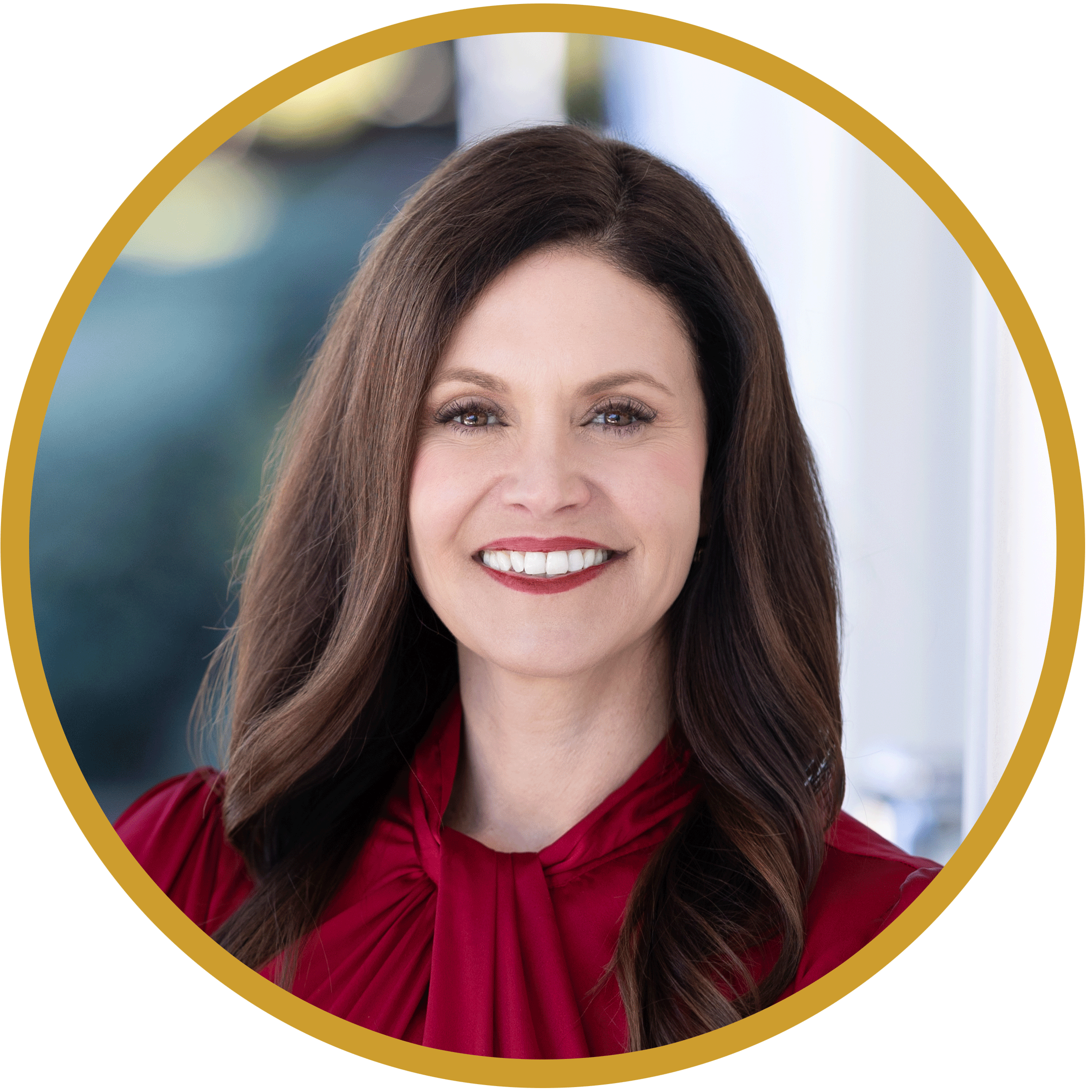
Jennifer Davidson,
Owner | Office Manager | Senior Escrow Officer
Spring in Orange County is supposed to feel like momentum.
More listings. More buyers. Faster escrows. Cleaner closes.
But if you’ve been in the trenches lately, you know that’s not exactly how it’s playing out.
Deals are moving—but not always smoothly. Timelines are tightening—but not always efficiently. And while activity is up, so is friction.
At Prosper Escrow, we’re seeing a clear pattern emerge across transactions this spring:
It’s not the market that’s slowing deals down—it’s what’s happening inside escrow.
Let’s break down the real reasons deals are stalling right now—and how top agents are staying ahead of it.
There’s a growing expectation across Orange County that deals should move faster than ever.
Shortened contingencies. Compressed timelines. Pressure to close quickly to win offers.
But speed without structure creates risk.
What we’re seeing:
The result?
Deals that look fast on paper—but stall in execution.
Speed only works when every party is aligned from day one.
In a competitive environment, many listings are hitting the market before the full disclosure package is ready.
That might win attention—but it creates downstream friction.
We’re seeing:
In a market like Orange County, where buyers are already stretching financially, surprises don’t go over well.
The earlier disclosures are delivered, the stronger the deal becomes.
Even with strong demand, today’s buyers are more cautious than they were in previous cycles.
They’re:
This shows up inside escrow as:
Deals don’t fall apart because of major issues—they fall apart because uncertainty isn’t managed.
Lenders are working fast—but they’re also operating within tighter guidelines.
We’re seeing:
When timelines are already compressed, even small lender delays can create ripple effects across the entire transaction.
Proactive communication with lenders is no longer optional—it’s critical.
This is the most common—and most preventable—issue we’re seeing.
When communication breaks down between agents, lenders, buyers, sellers, and escrow, small issues become big problems.
Examples we’re seeing every week:
The best escrows aren’t just managed—they’re orchestrated.
This is a local nuance that matters more than most people realize.
In Orange County:
That gap creates:
What happens in the first 72 hours of escrow matters more than ever.
Spring brings volume—and with it, bandwidth challenges.
Even top-performing agents are juggling multiple escrows, new listings, and active buyers at the same time.
When bandwidth gets stretched:
Systems and support matter more than experience alone.
So what separates the deals that close smoothly from the ones that stall?
It comes down to proactive structure.
Here’s what we’re seeing from top-performing agents right now:
Front-load the deal
Complete disclosures before going live whenever possible. Set realistic timelines based on lender input. Align expectations with all parties upfront.
Over-communicate early
Create daily touchpoints in the first three to five days of escrow. Provide clear milestone updates and escalate issues immediately.
Manage buyer emotions
Prepare buyers for inspections, appraisals, and timelines. Reduce uncertainty before it turns into hesitation.
Partner with the right escrow team
Work with a team that prioritizes communication, process, and local expertise in Orange County transactions.
The market is active. Deals are happening.
But the difference between a deal that closes and one that falls apart often comes down to what happens inside escrow.
This spring, the agents who win aren’t the ones moving the fastest.
They’re the ones managing the process the best.
If you want a smoother path to close this season, it starts with understanding where deals actually break—and building a system to prevent it.
That’s where we come in.
About the Author
Jennifer Davidson, Sr. Escrow Officer and owner of Prosper Escrow, has spent nearly two decades mastering the art of escrow. Since beginning her career in 2006, her natural talent, attention to detail, and commitment to excellence have made her a trusted leader in residential sales, refinances, probate sales, short sales, mobile home transactions, and co-ops.