


The Hidden Cost of Delayed Disclosures
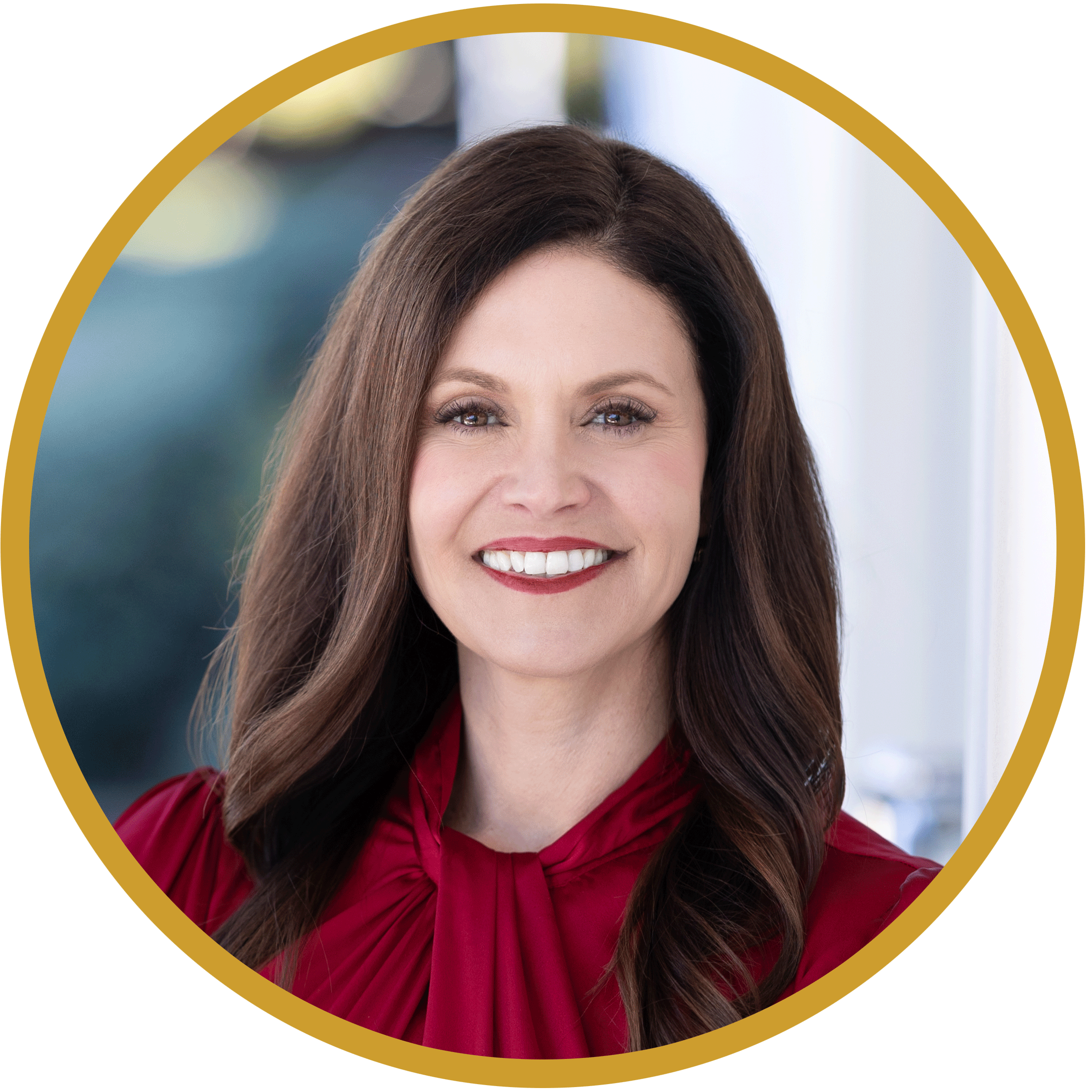
Jennifer Davidson,
Owner | Office Manager | Senior Escrow Officer
Most agents understand that disclosures are important.
What many underestimate is how much timing matters.
Because in today’s Orange County market, delayed disclosures aren’t just an inconvenience.
They’re one of the fastest ways to create friction inside a transaction.
We see it happen all the time:
A deal starts strong. The offer is accepted. Everyone feels good.
Then disclosures arrive late—or incomplete.
Momentum slows.
Questions start stacking up.
Confidence drops.
And suddenly, what looked like a smooth escrow becomes a much more fragile deal.
Let’s talk about why delayed disclosures are becoming such a major issue—and how top agents are staying ahead of it.
The moment escrow opens, buyers are emotionally committed—but still evaluating risk.
That’s an important distinction.
Even after an accepted offer, buyers are still asking themselves:
When disclosures are delayed, that uncertainty stretches out longer than it should.
And uncertainty creates hesitation.
The longer buyers sit without information, the more room there is for anxiety, over-analysis, and outside influence.
Strong escrows depend on momentum.
When the process moves clearly and consistently:
Delayed disclosures interrupt that flow.
Instead of moving forward, the deal pauses.
And paused deals become vulnerable.
The issue isn’t just the delay itself.
It’s the chain reaction that follows.
When disclosures arrive late, buyers often wonder why.
Even when there’s a reasonable explanation, the perception can become:
That mindset shift matters.
Late disclosures create downstream pressure.
Suddenly:
Instead of making thoughtful decisions, everyone starts racing the clock.
When disclosures reveal surprises later in escrow:
Even small issues can become major negotiation points when they surface late.
This is the part most people underestimate.
Delayed disclosures don’t just impact logistics.
They impact trust.
And once trust weakens, every conversation becomes harder.
Across Orange County, we’re seeing a few common causes:
In competitive environments, some sellers want to hit the market immediately.
That often means:
The goal is speed—but the result is friction later.
As activity increases, timelines tighten.
Vendors, inspectors, and agents are all moving quickly—which can create bottlenecks.
Some sellers simply aren’t prepared for how much information needs to be disclosed.
That can delay document collection and review.
The best agents treat disclosures as a strategic advantage—not just a compliance requirement.
Here’s how they stay ahead:
Whenever possible:
The more complete the package, the smoother the escrow.
Set expectations immediately.
Help sellers understand:
Prepared sellers create cleaner transactions.
Don’t let disclosures sit unread.
Encourage buyers to:
Early clarity reduces late-stage stress.
If delays happen, communicate proactively.
Silence creates suspicion.
Clear communication creates trust.
Even difficult conversations become easier when expectations are managed correctly.
Remember:
Buyers are not just reviewing information.
They’re interpreting risk.
The way disclosures are framed and communicated matters just as much as the documents themselves.
Disclosures don’t usually kill deals.
But delayed disclosures often weaken them.
Because every day without clarity creates more room for uncertainty.
And uncertainty is what slows momentum, increases renegotiation, and puts transactions at risk.
The agents creating the smoothest escrows right now aren’t just focused on speed.
They’re focused on timing, preparation, and communication.
That’s what keeps deals moving.
And that’s what clients remember long after closing.
About the Author
Jennifer Davidson, Sr. Escrow Officer and owner of Prosper Escrow, has spent nearly two decades mastering the art of escrow. Since beginning her career in 2006, her natural talent, attention to detail, and commitment to excellence have made her a trusted leader in residential sales, refinances, probate sales, short sales, mobile home transactions, and co-ops.