


Managing Rate Lock Expirations in a Volatile Market
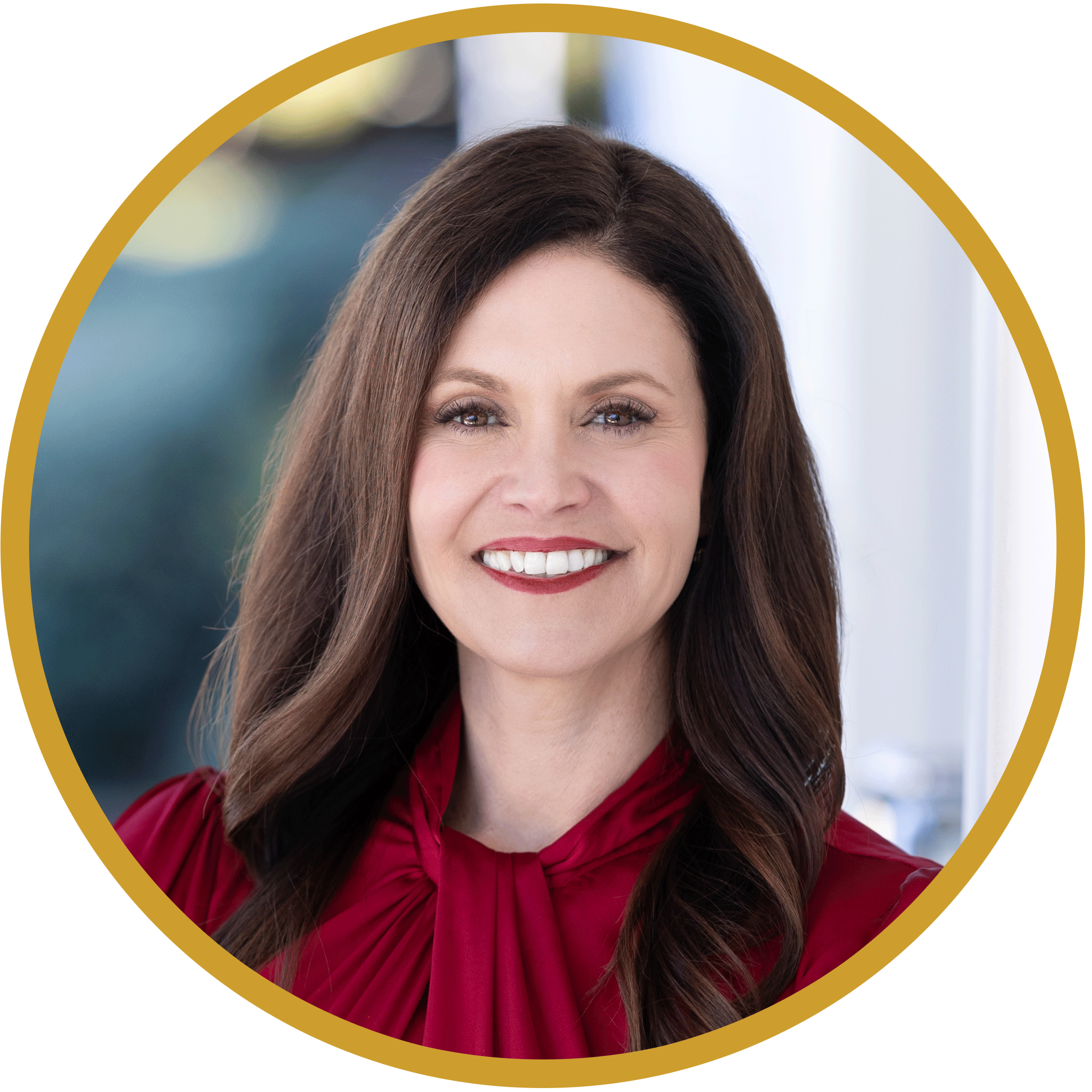
Jennifer Davidson,
Owner | Office Manager | Senior Escrow Officer
In previous market cycles, rate locks were a formality.
Today, they are a liability — if not managed carefully.
In 2026, we are seeing more transactions affected by rate lock expirations than at any point in recent years.
Why?
Because the conditions have changed.
When these factors collide, rate lock timelines become fragile.
And when they expire, it impacts everyone.
A rate lock is a lender’s guarantee to hold a specific interest rate for a defined period, typically:
If funding does not occur before the expiration date, the rate may:
Escrow cannot record without funding.
If funding is delayed due to rate lock expiration, the entire file pauses.
Many buyers believe rates may soften.
They delay locking.
They lock late.
That reduces buffer time inside escrow.
If underwriting takes longer than expected, the lock window shrinks.
Lenders are requesting:
Each added request compresses funding timelines.
As discussed in our recent post, insurance approval is no longer automatic in California.
If insurance underwriting lags, lenders cannot fund.
If funding stalls, the rate lock clock continues ticking.
Here is the typical sequence:
Suddenly, what seemed like a stable escrow becomes fragile.
In most cases:
However:
Responsibility can vary.
Escrow does not assign fault — we execute according to lender funding instructions and contractual timelines.
Sellers often:
When a rate lock delay shifts closing, stress rises.
Without proactive communication, sellers may assume:
In reality, it may be a simple timing issue.
Managing perception matters.
When escrow opens, ask:
Put that date on your calendar.
Treat it like a contingency.
If escrow is 30 days and the lock is 30 days, there is zero buffer.
Encourage buyers to:
Small buffer = major stability.
As lock expiration approaches:
Do not wait until the day before expiration to check in.
Let sellers know:
“In today’s rate environment, lock timelines are closely monitored. We are tracking them weekly to ensure smooth funding.”
That single sentence builds confidence.
Spring markets increase urgency.
Rate volatility increases anxiety.
Buyers become nervous about payment shifts.
Sellers become nervous about closing delays.
Your ability to remain calm and structured becomes a differentiator.
Across Orange County this spring:
But we are also seeing:
Rate lock expirations are not catastrophic — but they are preventable in many cases.
When agents:
They dramatically reduce funding disruptions.
In today’s market, precision beats speed.
And precision begins with awareness.
At Prosper Escrow, we coordinate closely with lenders to track funding progress — but the most stable transactions always include proactive agent leadership.
Because in 2026, closing success is not accidental.
It is managed.
About the Author
Jennifer Davidson, Sr. Escrow Officer and owner of Prosper Escrow, has spent nearly two decades mastering the art of escrow. Since beginning her career in 2006, her natural talent, attention to detail, and commitment to excellence have made her a trusted leader in residential sales, refinances, probate sales, short sales, mobile home transactions, and co-ops.